May 29, 2026
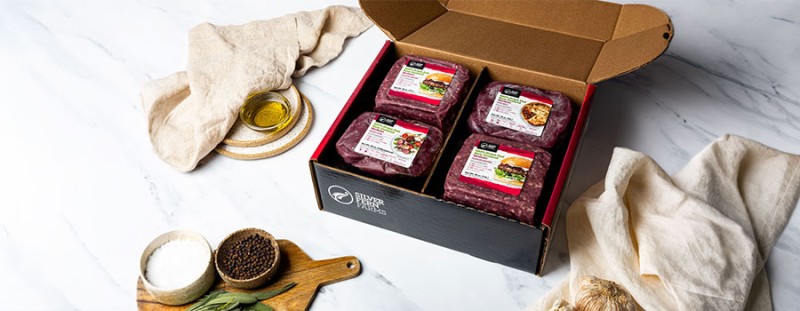
The Silver Fern Farms grass-fed venison meat box now selling on Costco.com. The 3.5 kg box contains nine packs of New Zealand farmed venison, three each of fast-fry stew meat, medallions, and ground meat. The three-way venison mix comprised leg cuts and shoulder cuts, improving carcass utilisation.
The North American Retail Accelerator programme (NARA) has helped Silver Fern Farms (SFF) achieve cut-through and build credibility in the US retail space.
Pre-NARA, SFF had made formative inroads with venison to United States retail, leveraging P2P funding post-Covid, SFF USA Director of Sales Matt Luxton says.
“That helped us, and when NARA came along, it was like fuel to the fire, because it’s enabled us, and others in the industry, to gain traction,” he says.
For SFF, building momentum has centred on developing a multi-channel retail strategy.
“Retailers want confidence and proof that you’re financially robust, credible and reliable,” Luxton explains, “and multi-channel retail formats are a good way of supporting this.”
A good example of that multi-channel approach was the addition of SFF venison to the Costco e-commerce platform (Costco.com), with assistance from NARA.
“We see it as a stepping stone, which has given retailers confidence and helped consumers get attached to our venison.”
Growing customer connection is the key to growing retail demand, and this is something SFF is well-placed to do for their New Zealand farmed venison products through Greenstone Meats, a US-based meat importing business owned by SFF, Alliance Group, ANZCO, and Australian meat exporter WAMMCO. The Greenstone connection was crucial in establishing and growing the SFF beef and lamb category in the 2000+ supplied retail outlets throughout the country.
“Part ownership of that supply chain brings us closer to the end consumer. We’re able to fill in any black holes of information and are getting a good understanding on trends that will influence demand for venison.
“That gives us confidence and should give our farmers confidence as well.”
At a high-level, NARA had assisted SFF to align and take advantage of market opportunities, Luxton says.
“With a new and young category like venison, promotional frequency is really important, because that’s how we get it into the mouths of people for the first time. NARA has assisted us with promotion, which is helping create future customers for our New Zealand farmed venison.”
The activating of retail through NARA is a great story, but for SFF, the downstream benefits to farmer suppliers is another positive benefit. The venison schedule has had a roller-coaster reputation, Luxton says, but NARA, along with other DINZ-supported initiatives, had brought schedule stability.
“[Achieving] stable returns for our suppliers in our fifty percent cooperative-owned structure is really important.”
Luxton, also a DINZ Board member, says programmes like NARA have helped increase overall North American sales and improved the resilience of the New Zealand farmed-venison supply chain. Over the past five years, venison companies have worked hard to develop a three-way balance between long-established European customers, he says, while growing demand in North America, China and other markets.
“It’s boosted the resiliency of the venison industry along the supply chain, and I really believe it’s set us up for a positive future.”